Your First Time Rafting the Salmon River: A Beginner’s Guide to an Unforgettable Adventure
Key Takeaways
- The Perfect First Multi-Day Trip: The Salmon River’s pool-and-drop rapids and warm water make it the ideal choice for your first multi-day whitewater rafting adventure in Idaho.
- No Experience Necessary: You don’t need to be a strong paddler or an athlete. Our guides teach you everything on the first morning.
- Safety Is Our Priority: Every Winding Waters guide is trained in first aid and CPR, and every trip carries a satellite phone and expedition first aid kit.
- It’s More Than Just Rapids: Think delicious meals on sandy beaches, wildlife around every bend, and stargazing with zero light pollution.
- We Answer the “Dumb” Questions: Bathrooms, falling out, cell service, what to wear—this guide covers everything you’re afraid to ask.
So, You’re Thinking About Your First River Trip
Let’s be honest: the idea of spending four or five days on a raft in the Idaho wilderness sounds equal parts thrilling and terrifying. You’re picturing massive waves, remote backcountry, and maybe wondering whether you’re really the kind of person who does something like this.
You are. And you’ve come to the right place.
At Winding Waters River Expeditions, we’ve been guiding first-timers down the
Salmon River—Idaho’s legendary “River of No Return”—for years. We’ve watched nervous beginners white-knuckle the first rapid and spend the rest of the trip asking, “Can we do that again?” That transformation never gets old. It’s the reason we do this.
Why the Salmon River Is the Perfect River for Beginners
Not all rivers are created equal for first-time rafters. Some are continuous whitewater—a nonstop barrage of waves that demands experience. The Salmon is different. Our trips run the 53-mile lower section known as the “Canyons” of the Salmon River, threading through four spectacular canyons—Green, Cougar, Snow Hole, and Blue Canyon—each one revealing new layers of rock, shoreline, and river character.
Here’s what makes it so beginner-friendly:
- Warm, crystal-clear water. The Salmon is undammed and fed by snowmelt. By the time that water reaches our section of the river, it has warmed to a refreshing swimming temperature that many guests find just right on a hot day.
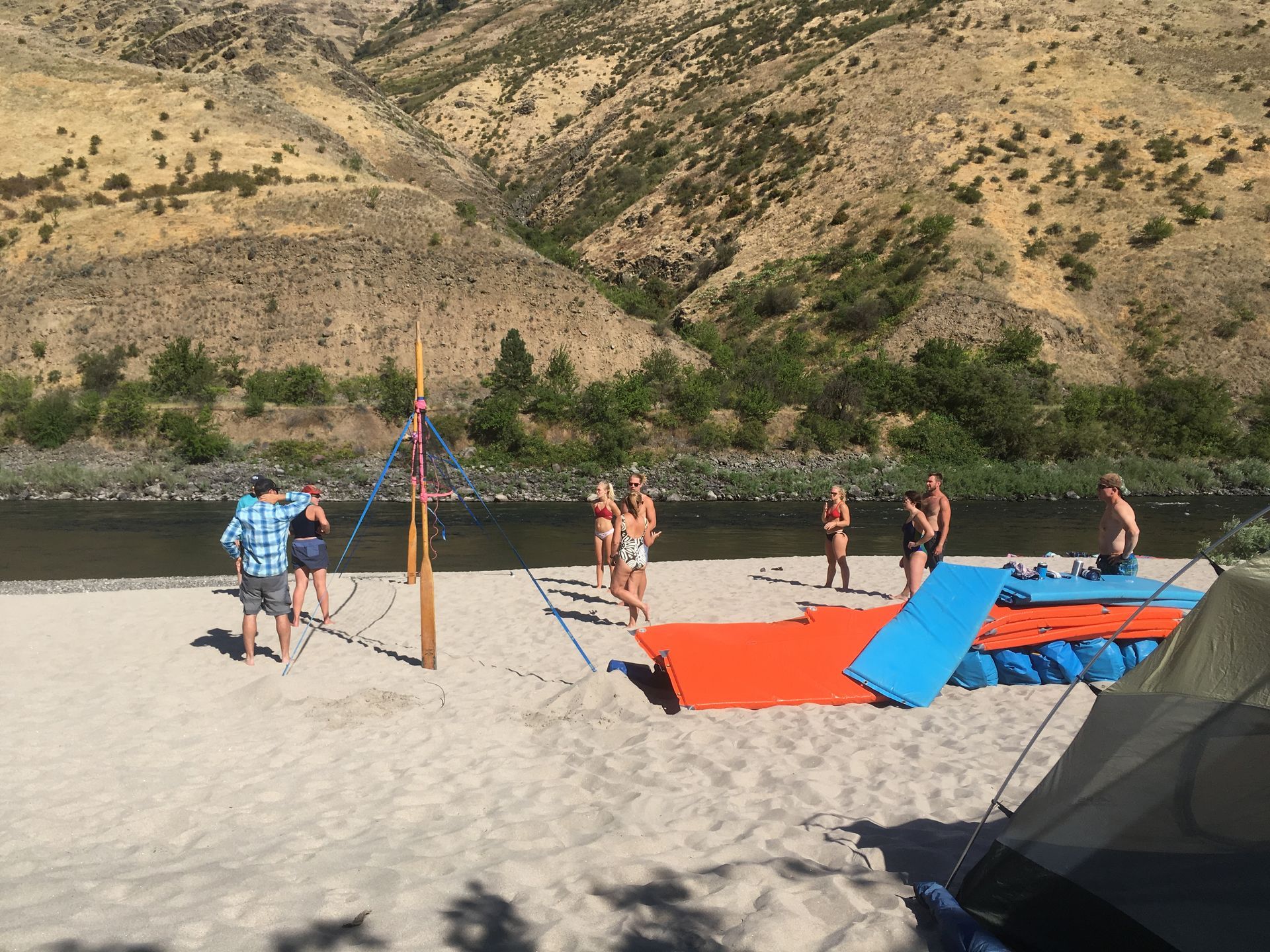
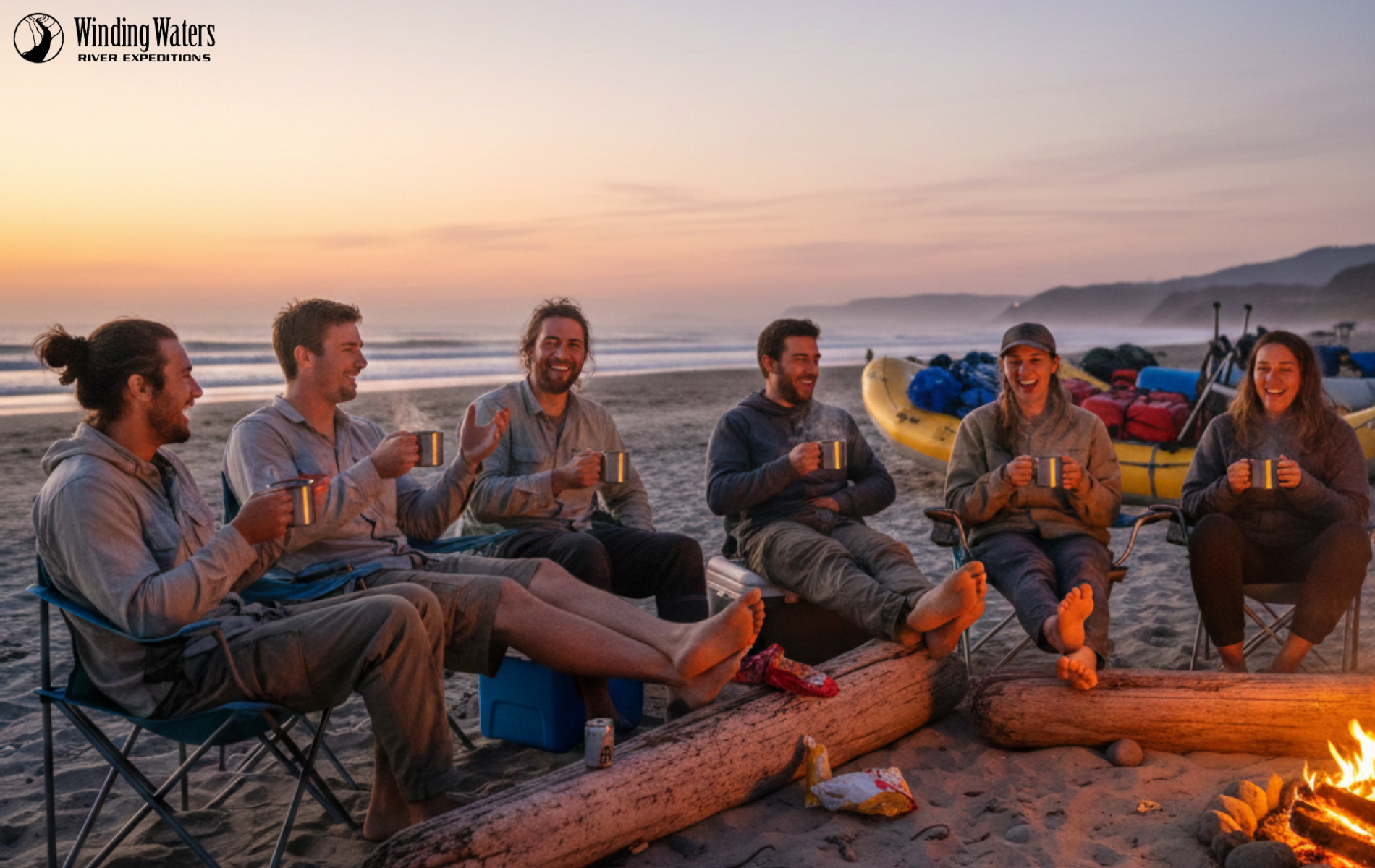
- White sand beaches. Each night you’ll camp on large, white sand beaches that feel more like a coastal getaway than a backcountry expedition. They provide the ideal setting for relaxation, beach volleyball, and sleeping under the stars.
- Pool-and-drop rapids. The Salmon follows a pool-and-drop, stair-step rhythm: calm, glassy pools followed by a burst of exciting whitewater, then back to calm water. You get the adrenaline rush and then time to catch your breath. It’s the perfect pattern for beginners—action, then relaxation, all day long.
- Wildlife and history everywhere. The Salmon River watershed is home to bighorn sheep, elk, river otters, bald eagles, and a myriad of songbirds. You’ll also pass pictographs created by early inhabitants and sites of Nez Perce, Chinese miner, and early settler activity stretching back thousands of years.
You Don’t Need to Be a Pro (Or Even Close)
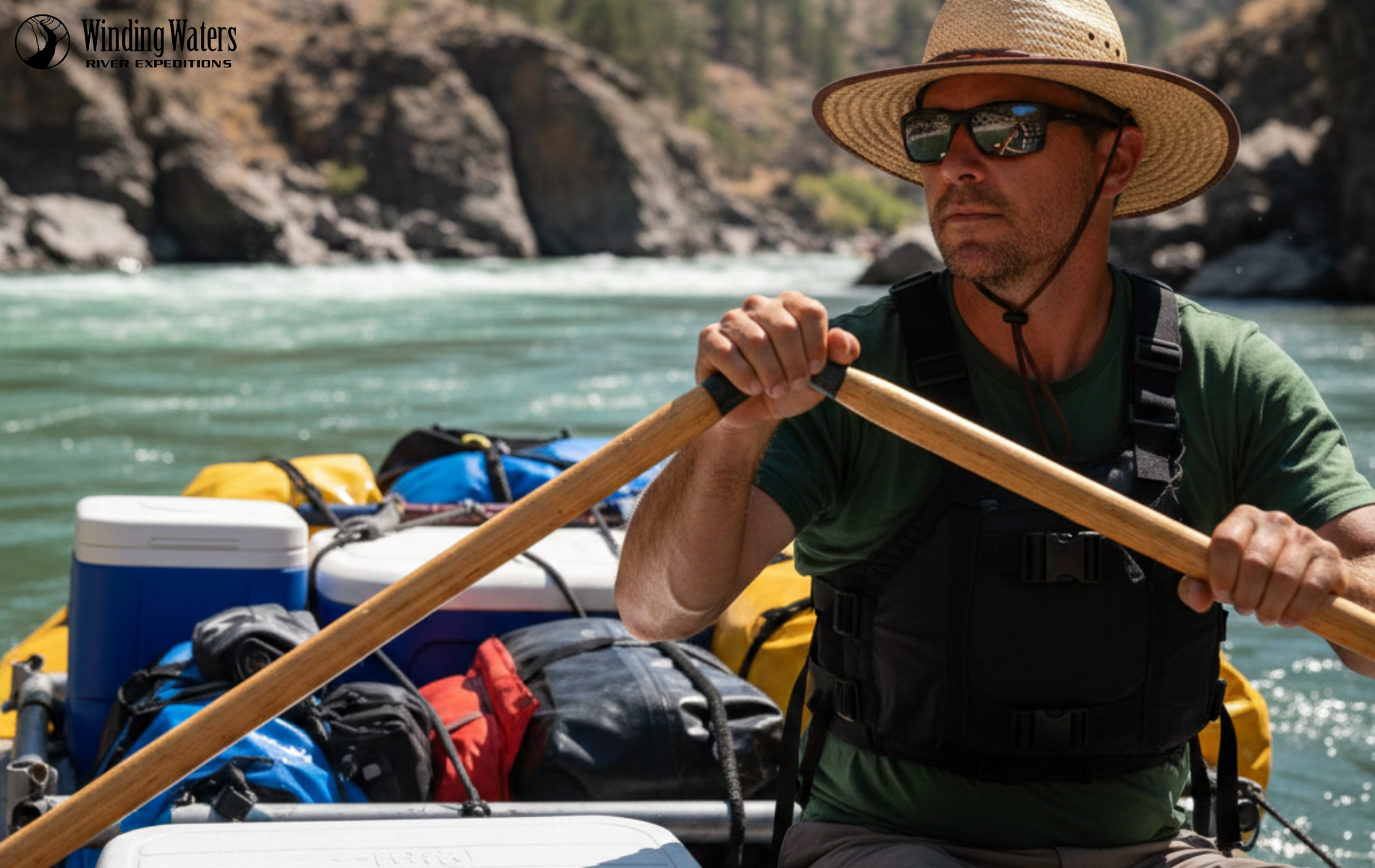
One of the biggest misconceptions about multi-day rafting is that you need to be an athlete to enjoy it. You don’t. We’ve guided grandparents, kids as young as five, weekend hikers, and plenty of people whose primary exercise is walking to the coffee machine. You don’t even need to know how to swim—everyone wears a US Coast Guard–approved PFD (personal flotation device) designed to keep your head above water.
On an oar boat, your guide rows while you sit back and soak in the scenery. In a paddle raft, you’ll paddle as a team, but the guide calls every stroke—forward, back, stop. That’s the entire vocabulary. And if you’re feeling adventurous, you can try an inflatable kayak on the calmer stretches—it’s like having your own personal roller coaster on the water. Depending on river flows, stand-up paddle boards may also be available.
What to Expect from the Rapids: Understanding Salmon River Whitewater
If the word “whitewater” makes your stomach flip, take a breath. The rapids on the Salmon River are a lot more fun—and a lot less scary—than whatever you’re imagining right now.
Understanding the Pool-and-Drop Rhythm
Some rivers are continuous whitewater from put-in to take-out. The Salmon is not that. It’s what river people call a “pool and drop, stair-step” river: calm, glassy stretches (the pools) followed by sections where the river drops and creates rapids (the steps). After each rapid, you’re back in another quiet pool.
Think of it like a roller coaster with built-in rest stops. You get the rush, then you get to float, swim, and take in the canyon walls before the next one. For first-time rafters, this rhythm is everything—it keeps the trip exciting without ever feeling overwhelming.
What Does a Class III–IV Rapid Feel Like?
Rapids are rated on a scale from Class I (very small waves, slow current) through Class VI (maximum difficulty). The Salmon River’s Canyons section features Class III and Class IV whitewater. Class III means large, irregular waves up to four feet that require some maneuvering. Class IV means longer, more powerful rapids where the course requires careful navigation.
So what does that feel like from inside the raft? Picture this: the raft dips into a wave trough, rises up over a three-to-four-foot wave, and water splashes over the bow. Your guide calls out “forward paddle!” and the whole boat is laughing and whooping. Fifteen to thirty seconds later, you’re through, floating in calm water, shaking the river out of your hair. Exciting? Absolutely. Your guide has run these rapids many times and knows exactly how to navigate them safely.
Your Guide Is the Captain: How We Keep You Safe
All Winding Waters guides are licensed, trained in first aid and CPR, and know these rapids inside and out. Before you hit the first rapid, your guide will walk you through a thorough river awareness and trip orientation: how to sit in the raft, how to paddle on command, and what to do in the unlikely event someone goes for an unplanned swim. Every trip is equipped with expedition first aid kits and a satellite phone for emergencies.
Your job is simple: listen to your guide, paddle when they say paddle, and hold on when they say hold on. They handle the navigation. You get to enjoy the ride.
A Day on the Salmon River: What First-Timers Can Expect
One of the best surprises of a multi-day rafting trip is the rhythm of each day. No alarm clock. No schedule. No rush. Here’s what a typical day looks like when you’re a first-timer on the Salmon.
Morning: Coffee, Hot Breakfast, and a River Briefing
You’ll wake up on a sandy beach to the smell of fresh coffee and a hot breakfast your guides have already started cooking. And the food is shockingly good—meals are prepared in our complete camp kitchen, and you’ll dine at tables with tablecloths, chairs, plates, and real silverware. Our guides take care of everything from cooking to cleanup. After breakfast, you’ll pack your personal dry bag, pull on your PFD, and gather for a morning briefing where your guide talks you through the day’s rapids and highlights.
On the Water: Paddling, Floating, and Soaking It In
Days on the water blend paddling through rapids, floating through calm stretches, and stopping for hikes to side canyons and swimming holes. Along the banks, you may spot pictographs created by early inhabitants—evidence of human activity in these canyons dating back thousands of years. Keep your eyes on the cliffs for bighorn sheep, watch the banks for river otters, and look up for bald eagles and osprey.
On the calmer pools, you might hop out of the raft to float alongside it, try an inflatable kayak, or just lean back and watch the canyon walls slide by above you. This is the part that surprises most first-timers: how much time you spend doing absolutely nothing, and how much you love it.
Afternoon at Camp: Sandy Beaches, Sunsets, and River Meals
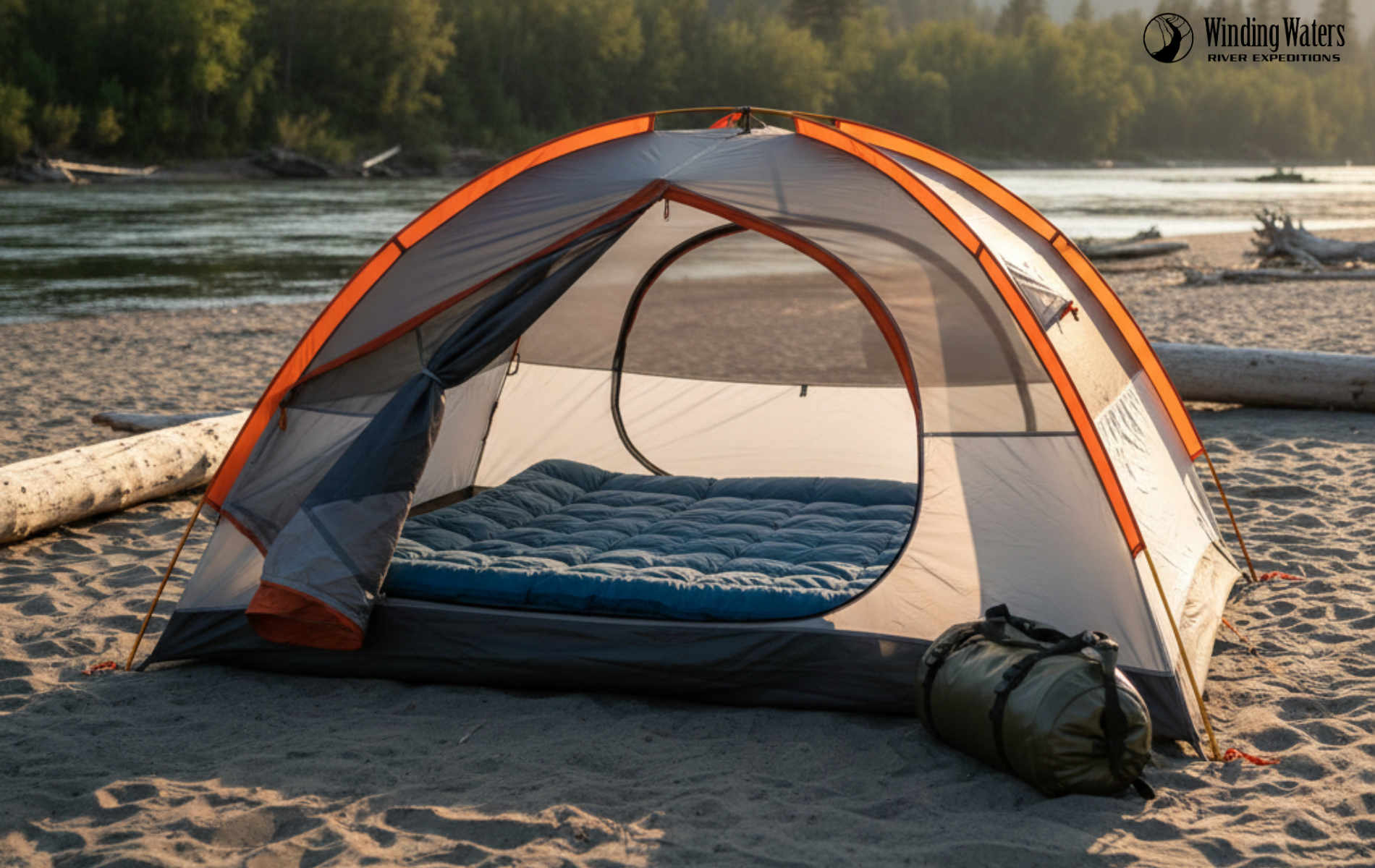
You’ll pull into camp in the early to mid-afternoon, leaving plenty of time to explore. Set up your tent on the sand (we provide roomy four-person tents for two people, plus cots), take a swim, try some fishing for smallmouth bass, or grab a camp chair and a cold drink and watch the river roll by. Your guides will handle appetizers and a full dinner.
As the sun drops behind the canyon walls and the stars come out—with virtually no light pollution out here—most first-timers have the same thought: “Why didn’t I do this sooner?”
The Questions Every First-Timer Is Afraid to Ask
Every veteran river person was once a first-timer with a head full of questions they felt silly asking. We’ve heard them all, and we promise—none of them are dumb. Here are the honest answers.
How Do the Bathrooms Work? (Seriously.)
This is the number-one question, every single trip, and the answer is way better than you’re expecting. We bring a portable toilet system called the Groover (that’s official river vernacular) that gets set up at a separate, private area at each camp. It’s complete with toilet paper and hand sanitizer. Your guides will give you the full walkthrough on day one. By the end of the trip, you might actually prefer it to most public restrooms.
We follow Leave No Trace minimum-impact camping practices on all river trips, which means everything we bring in, we pack out—including all waste. It’s part of being good stewards of this wilderness.
What If I Fall Out of the Raft?
This is a fair question, so let’s address it directly. Unplanned swims are relatively rare—most people make it through the entire trip without going overboard. But here’s why you’ll be completely fine if it happens:
- You’re wearing a US Coast Guard–approved PFD at all times on the water. These high-buoyancy jackets are designed to keep your head above water, even if you do nothing.
- Before the first rapid, your guide will walk you through exactly what to do if you take an unplanned swim.
- Your guide and the other boats will be right there. You’ll typically be back in the raft within seconds.
- The water is warm, the rapids are followed by calm pools, and your crew will be cheering you on.
An unplanned swim isn’t a crisis—it’s a river story you’ll tell for years.
Will I Be Cold? What Should I Wear?
The Salmon River corridor is known for warm, sunny weather during our rafting season, with the river running warm enough for comfortable swimming. Mornings and evenings can be cooler, so layers are key.
The golden rule: avoid cotton. Cotton gets wet, stays wet, and makes you cold. Instead, wear quick-drying shorts and tops during the day. For your feet, synthetic sandals with straps (like Chacos, Bedrocks, or Tevas) work great—we do not recommend flip-flops. For evenings and mornings, bring warmer layers including a fleece or synthetic-fill jacket, pants, socks, and closed-toed shoes. We’ll send you a detailed packing list before your trip. We provide PFDs, dry bags, and paddles. If you’re riding an inflatable kayak, we provide a helmet as well.
What If I’m Not a Strong Paddler?
Then you’re in great company—most first-timers aren’t. Your guide teaches basic strokes on the first morning, and the commands are three words: forward, back, stop. On an oar boat, you don’t paddle at all—the guide rows while you enjoy the ride. Either way, your guide has the skills and equipment to navigate every rapid safely.
Do I Need to Be a Strong Swimmer?
You don’t need to be a strong swimmer, or even know how to swim, to enjoy a river trip with Winding Waters. All participants wear a US Coast Guard–approved PFD at all times on the water. We have child-sized PFDs and look after our smallest guests with great care. That said, if you’re genuinely afraid of water, rafting may not be the best fit—but if you’re just a little nervous, that’s completely normal, and you’ll be in excellent hands.
What Do I Do with My Phone? Is There Cell Service?
There is no cell service on the river, and that’s one of the best parts of the trip. For four or five days, you get to unplug. No emails. No notifications. Just the sound of the river and the people around you.
Bring your phone for photos—the scenery is absolutely worth capturing—but keep it in a waterproof case or dry bag on the water. We carry a satellite phone for emergencies, so you’re never out of reach if something important comes up. And if you’re worried about camera batteries, bring extras or a portable solar charger—they do work out here.
When to Go: The Best Time for First-Time Salmon River Rafting
Our Salmon River rafting season runs July through September, and each window offers a slightly different experience for beginners:
- July: The sweet spot for most first-timers. Water is warm for swimming, rapids are fun and splashy, and long sunny days mean plenty of time at camp. This is when we see the most families and first-time rafters.
- August: Peak warmth, lower water levels, and the most relaxed pace. Great for anyone who wants more floating and swimming with mellower rapids.
- September: Cooler air, golden light, fall colors beginning in the canyon, and very few other groups on the river. A quieter, more contemplative experience.
If you’re not sure which dates work best, give us a call. We’ll help you pick the window that fits your group and comfort level.
You Can Do This. And It Will Be the Trip of a Lifetime.
Every year, we watch people who almost talked themselves out of signing up step off the river with something new—a confidence they didn’t know they had, a permanent smile, and the kind of stories that start with “Remember when we…”
A trip down the Salmon River is more than a vacation. It’s a chance to challenge yourself, disconnect from the noise, and fall in love with a wild corner of Idaho that most people will never see. You don’t need to be an expert. You don’t need to be fearless. You just need to show up. We’ll handle the rest.
Ready to take the leap? Learn more about our
Salmon River Rafting Trips or call us at 1-877-426-7238 to talk to a real person who can answer every last one of your first-timer questions.
Frequently Asked Questions
Is the Salmon River approachable for first-time rafters?
Yes. The Salmon River features Class III–IV pool-and-drop whitewater, warm water, and calm pools between rapids. All Winding Waters guides are trained in first aid and CPR, and every trip carries expedition first aid kits and a satellite phone.
The Salmon has earned a reputation as one of the best multi-day river trips in the country for first-time rafters.
Do I need rafting experience to go on a Salmon River trip?
No prior experience is needed. Your guides teach paddle strokes, safety procedures, and river commands before you hit the first rapid. People of all ages and fitness levels enjoy the trip every season, including children as young as five.
What should I pack for a multi-day Salmon River rafting trip?
Bring quick-drying clothing (no cotton), a swimsuit, sun protection, synthetic sandals with straps (no flip-flops), and warm layers for camp including a fleece jacket, pants, and closed-toed shoes. Winding Waters provides PFDs, dry bags, paddles, and camp gear including tents and cots. A detailed packing list is sent before your trip.
How do bathrooms work on a multi-day rafting trip?
Winding Waters carries a portable toilet system called the Groover that is set up in a separate, private area at each camp. It comes with toilet paper and hand sanitizer. All waste is packed out following Leave No Trace practices.
What happens if I fall out of the raft?
Unplanned swims are uncommon, but if it happens, your US Coast Guard–approved PFD keeps you floating with your head above water. Your guide will have briefed you on what to do, and the team will get you back in the boat quickly.
What is the best time to raft the Salmon River for beginners?
July is the sweet spot for most first-timers, with warm water and fun rapids. August offers the most relaxed pace, and September brings cooler weather with fewer crowds. The Salmon River season runs July through September. Call Winding Waters to find the best dates for your group.
Do I need to know how to swim to go rafting?
No. You don’t need to be a strong swimmer or even know how to swim. All participants wear US Coast Guard–approved PFDs designed to keep your head above water. Winding Waters provides child-sized PFDs for younger guests. The minimum age on the Salmon River is five years old.